


How to Charge AC & Heat Pump Systems: Superheat vs. Subcooling
Accurately charging residential and commercial cooling equipment is essential for compressor reliability, maximum SEER2 efficiency, and preventing premature warranty callbacks. The method you use depends entirely on the metering device installed inside the indoor air handler or evaporator coil:
1. Target Superheat (ASHRAE Empirical Formula):
Target SH (°F) = (3 × Indoor Wet Bulb - 80 - Outdoor Ambient Dry Bulb) / 2 2. Actual Superheat (Evaporator Exit):
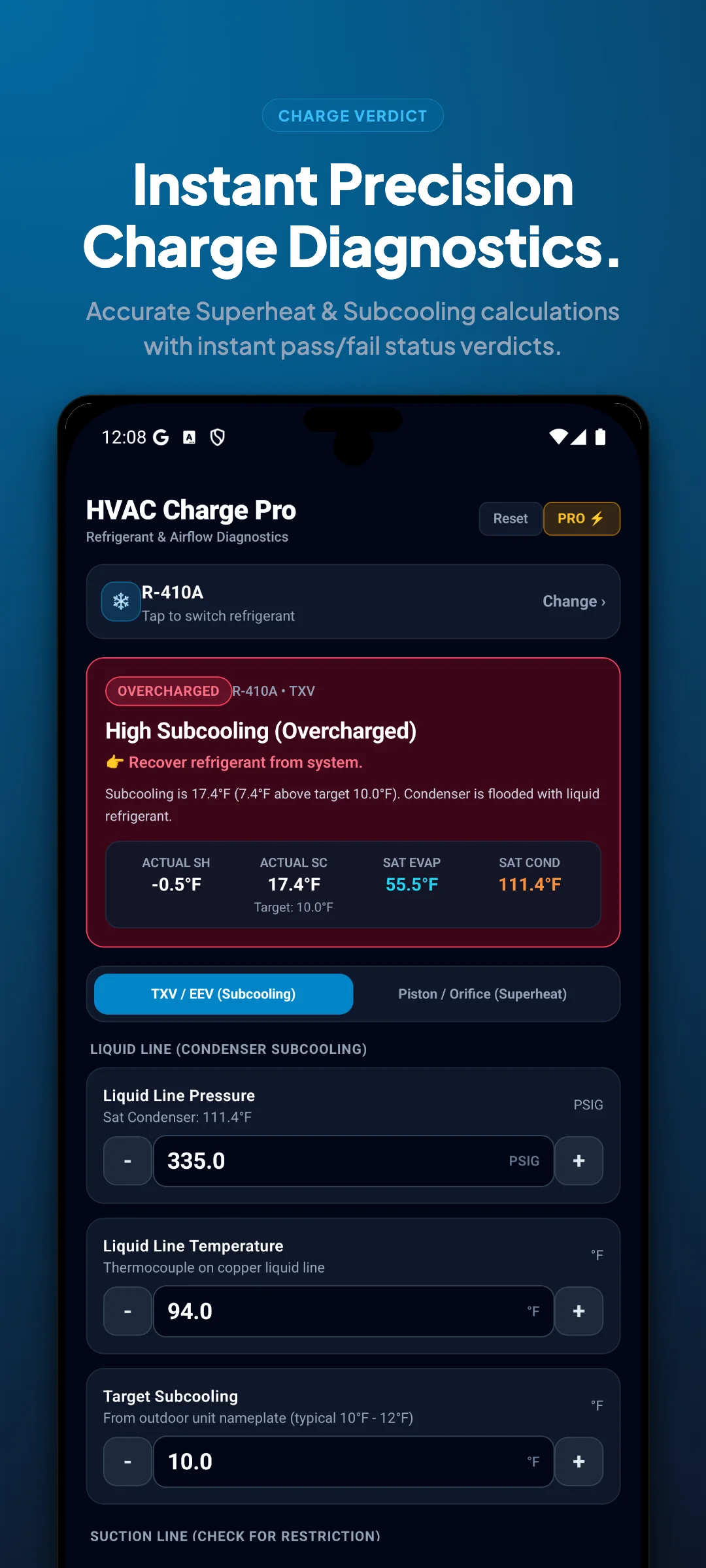
Actual SH (°F) = Suction Line Temp - Saturated Evaporator Temp (Dew Point) 3. Actual Subcooling (Condenser Exit):
Actual SC (°F) = Saturated Condenser Temp (Bubble Point) - Liquid Line Temp 2026 Refrigerant Operating Benchmarks & Guidelines
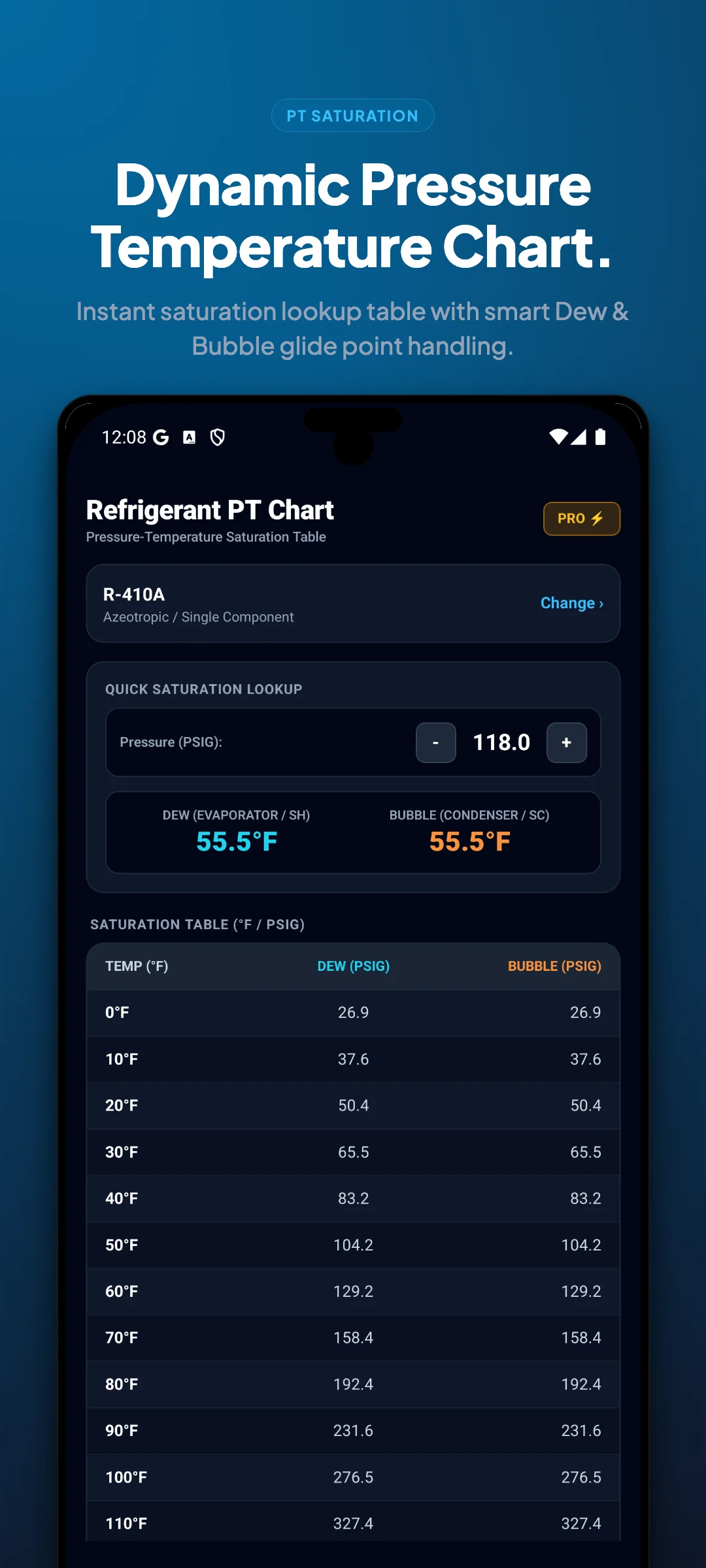
With the EPA transition to low-GWP A2L refrigerants (such as R-454B and R-32), HVAC technicians must account for blend glide. When calculating superheat on blended refrigerants, always reference the Dew Point pressure curve. When calculating subcooling on the high-pressure liquid line, reference the Bubble Point curve.
| Refrigerant | Safety Group | Primary Metering | Nominal Target | Saturation Curve |
|---|---|---|---|---|
| R-410A | A1 (Non-Flammable) | TXV / EEV | 10°F – 14°F Subcooling | Standard PT |
| R-454B (Puron Advance) | A2L (Low-GWP) | TXV / Electronic | 8°F – 12°F Subcooling | Dew (SH) / Bubble (SC) |
| R-32 | A2L (Low-GWP) | TXV / EEV | 10°F – 13°F Subcooling | Zero Glide Standard |
| R-22 (Legacy) | A1 (HCFC) | Fixed Orifice / Piston | Target SH Chart (12–20°F) | Standard PT |
Frequently Asked Field Diagnostic Questions
How do you calculate target superheat for fixed orifice systems? ↓
Target Superheat is calculated using the standard ASHRAE empirical formula: Target Superheat = ((3 × Indoor Wet Bulb) - 80 - Outdoor Ambient Dry Bulb) ÷ 2. This formula calculates the exact evaporator superheat required to optimize cooling capacity while preventing liquid refrigerant floodback under current indoor humidity and outdoor heat conditions.
When should an HVAC technician use subcooling versus superheat? ↓
Use Subcooling for systems equipped with a Thermal Expansion Valve (TXV) or Electronic Expansion Valve (EEV), as these metering devices modulate flow to maintain constant superheat. Use Superheat for systems with fixed metering devices such as pistons, capillary tubes, or fixed restrictors.
What is standard target subcooling for TXV systems using R-410A? ↓
Standard target subcooling for residential R-410A split systems with a TXV is typically between 10°F and 14°F (often 10°F or 12°F depending on the manufacturer data plate rating). Always verify against the outdoor unit data tag.
How do you charge A2L refrigerants like R-454B with temperature glide? ↓
R-454B (Puron Advance / Opteon XL41) is a zeotropic blend with approximately 1.5°F temperature glide. Always charge liquid from the cylinder into the low side through a throttling manifold valve. Use the Dew Point pressure-temperature curve for superheat and the Bubble Point curve for subcooling.
How does this subcooling calculator for R-454B (454B) work on heat pump and AC systems? ↓
To calculate subcooling on R-454B systems: Subcooling (°F) = Saturated Condenser Temperature (Bubble Point from liquid gauge pressure) - Actual Liquid Line Temperature. Most 2025/2026 R-454B residential TXV systems target 8°F to 12°F of subcooling. Because R-454B has approximately 1.5°F of temperature glide, this subcooling calculator always references the Bubble Point pressure curve for subcooling and requires liquid charging.
Is this HVAC superheat and subcooling calculator free to use? ↓
Yes. This free HVAC superheat calculator and subcooling calculator runs directly in your mobile browser with zero ads, signups, or subscription paywalls. Technicians can compute ASHRAE target superheat, actual superheat, and subcooling for R-410A, R-454B, R-32, and R-22 instantly on job sites.
What is a normal evaporator temperature split (Delta-T)? ↓
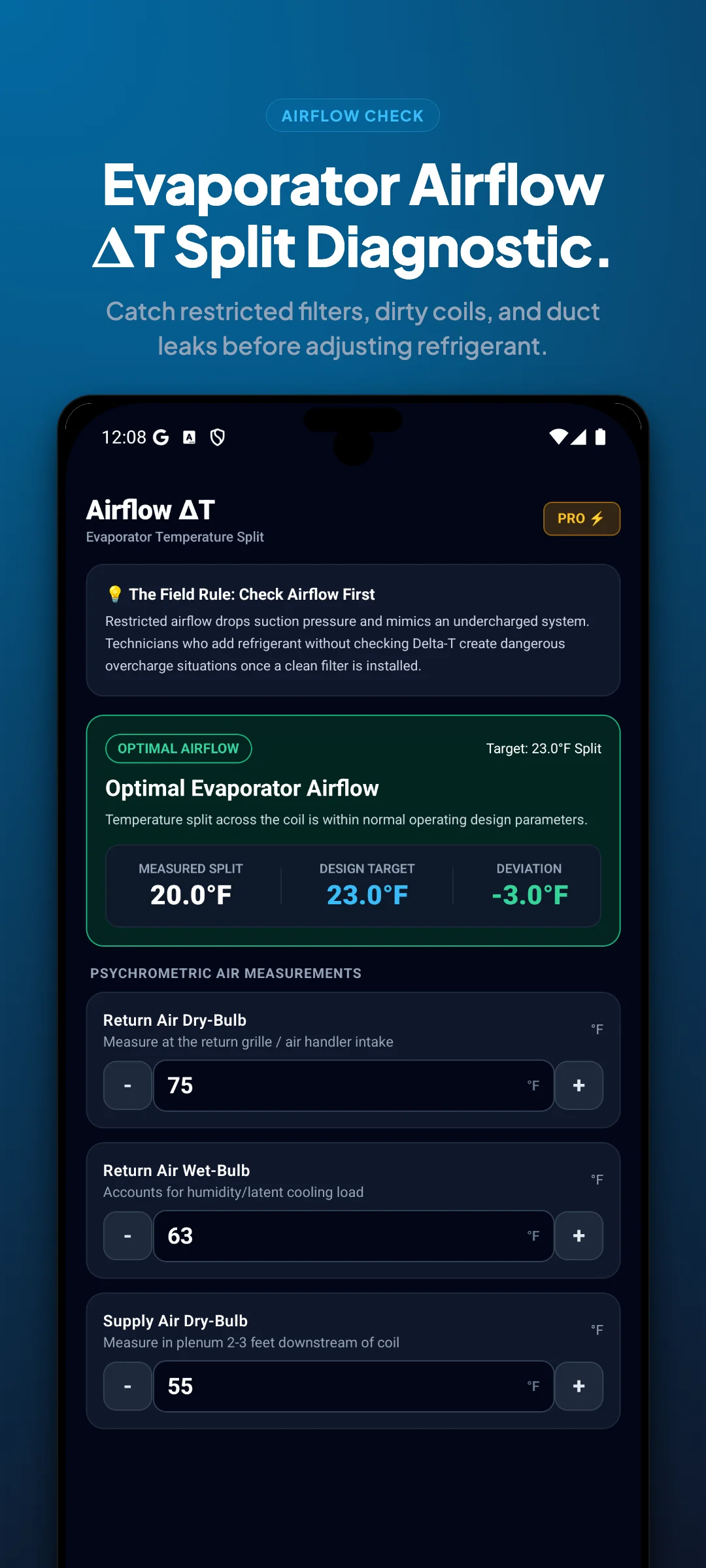
A standard air conditioning cooling temperature split across the evaporator coil is typically between 16°F and 22°F. Low split (<15°F) indicates high airflow, low capacity, or low refrigerant charge. High split (>23°F) usually indicates restricted airflow, such as a dirty air filter or blower wheel obstruction.