


How to Estimate a Contractor Job for True Net Profit in 2026
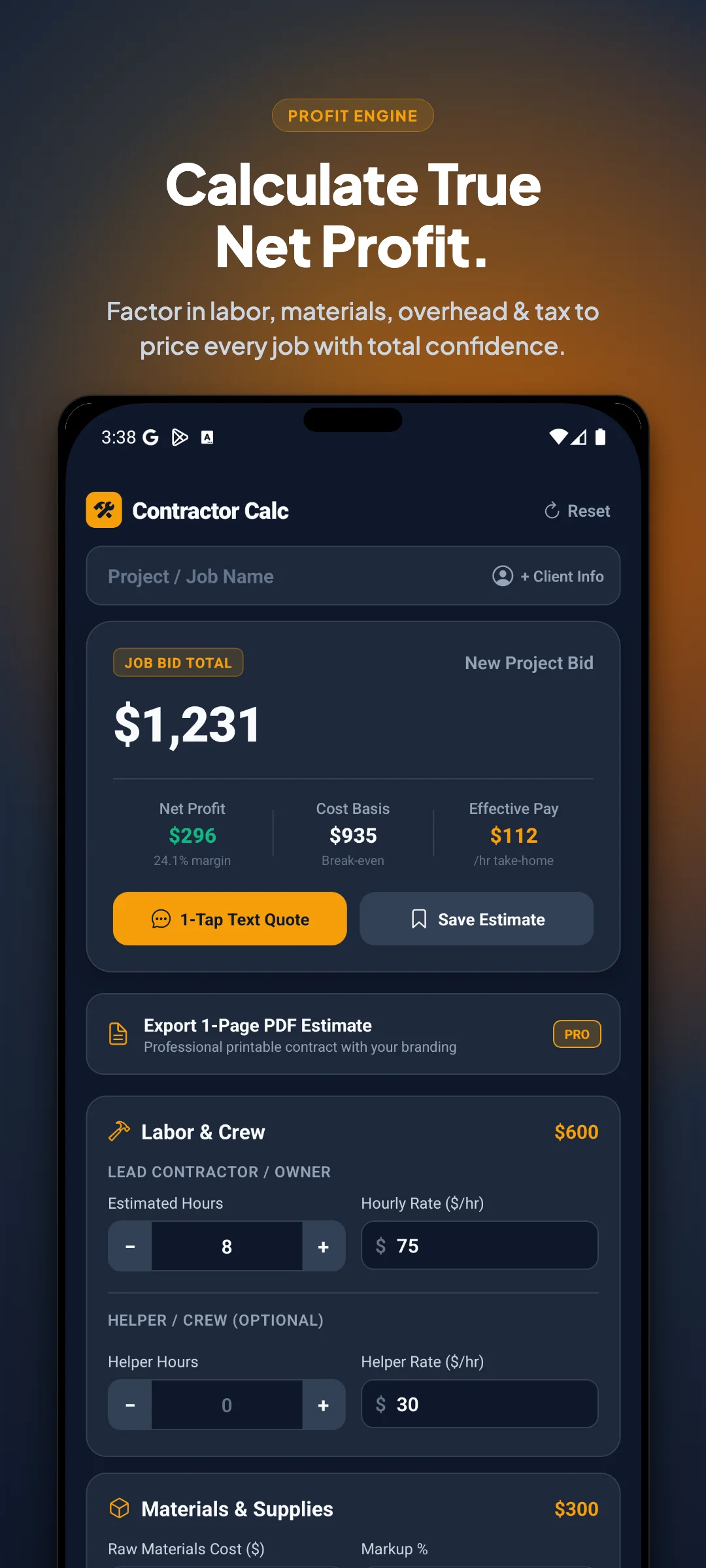
Most trade contractors, handymen, and residential remodelers lose money not because of poor craftsmanship, but because of flawed estimating math. The two most frequent bidding mistakes are forgetting overhead expenses (gas, insurance, tool wear) and confusing markup percentage with gross profit margin.
Total Client Bid = (Labor Costs + Billed Materials + Direct Expenses + Overhead Cushion) / (1 - Target Profit Margin %) + Sales Tax Markup vs. Profit Margin: Why Contractors Accidentally Underbid
A 20% markup does NOT yield a 20% profit margin. If your job direct costs total $2,000 and you add a 20% markup ($400), your selling price is $2,400. Your true profit margin is $400 ÷ $2,400 = 16.67%, leaving you short on profit. To achieve an actual 20% profit margin, you must divide your cost basis by (1 - 0.20), resulting in a bid of $2,500 ($500 profit).
2026 Trade Contractor Labor & Markup Benchmarks
Standard residential trade contractor rates, material markups, and target profit margins across North America:
| Trade Category | Typical Owner Rate | Materials Markup | Target Margin % |
|---|---|---|---|
| Handyman & Home Repair | $55 – $85 / hr | 20% – 35% | 25% – 35% |
| Residential Painting & Drywall | $50 – $75 / hr | 15% – 25% | 20% – 30% |
| Carpentry & Custom Framing | $65 – $95 / hr | 15% – 25% | 18% – 28% |
| Electrical & Lighting Subcontractor | $85 – $135 / hr | 25% – 40% | 25% – 35% |
| Plumbing & HVAC Service | $90 – $145 / hr | 30% – 50% | 25% – 40% |
| General Contractor Remodel Average | $75 – $110 / hr | 20% – 30% | 20% – 28% |
How to Calculate Your Break-Even Job Price
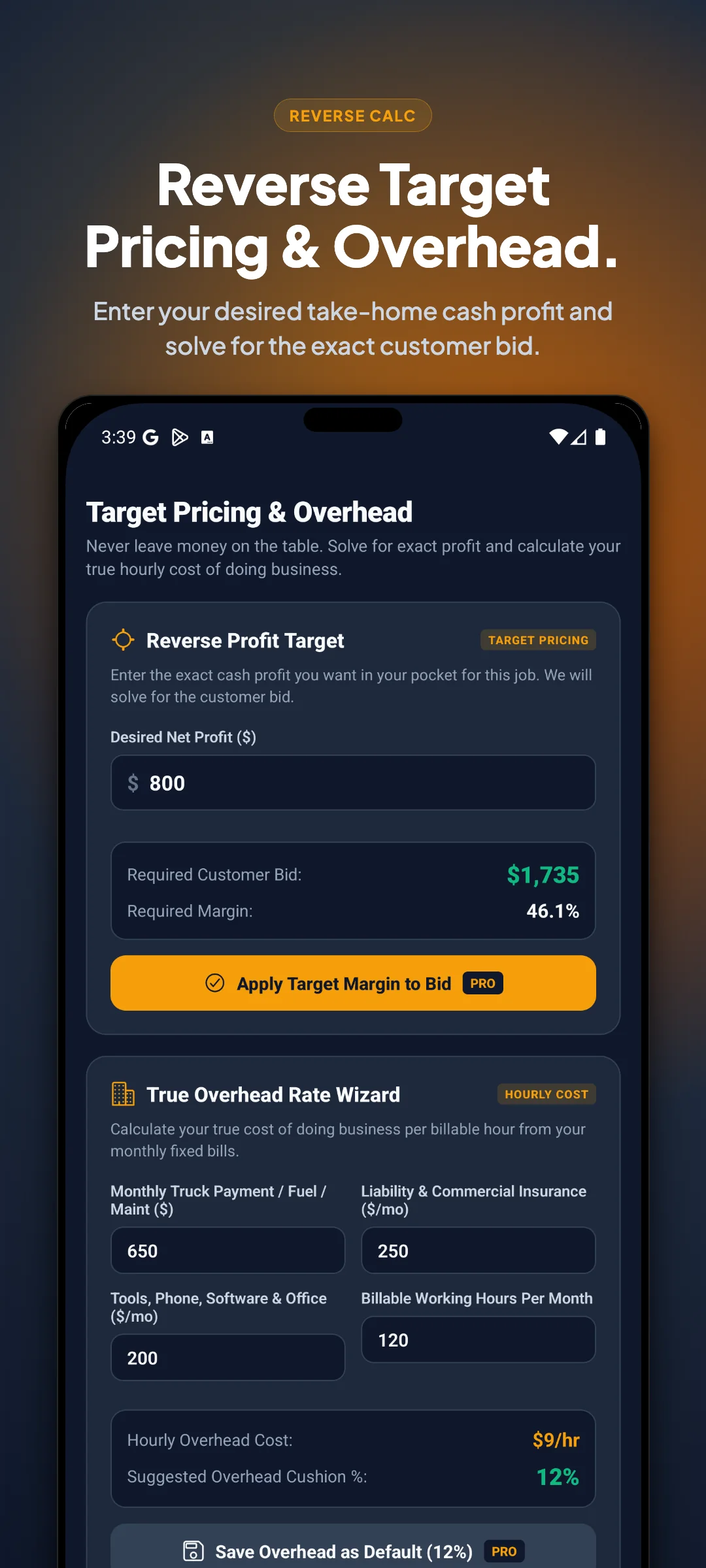
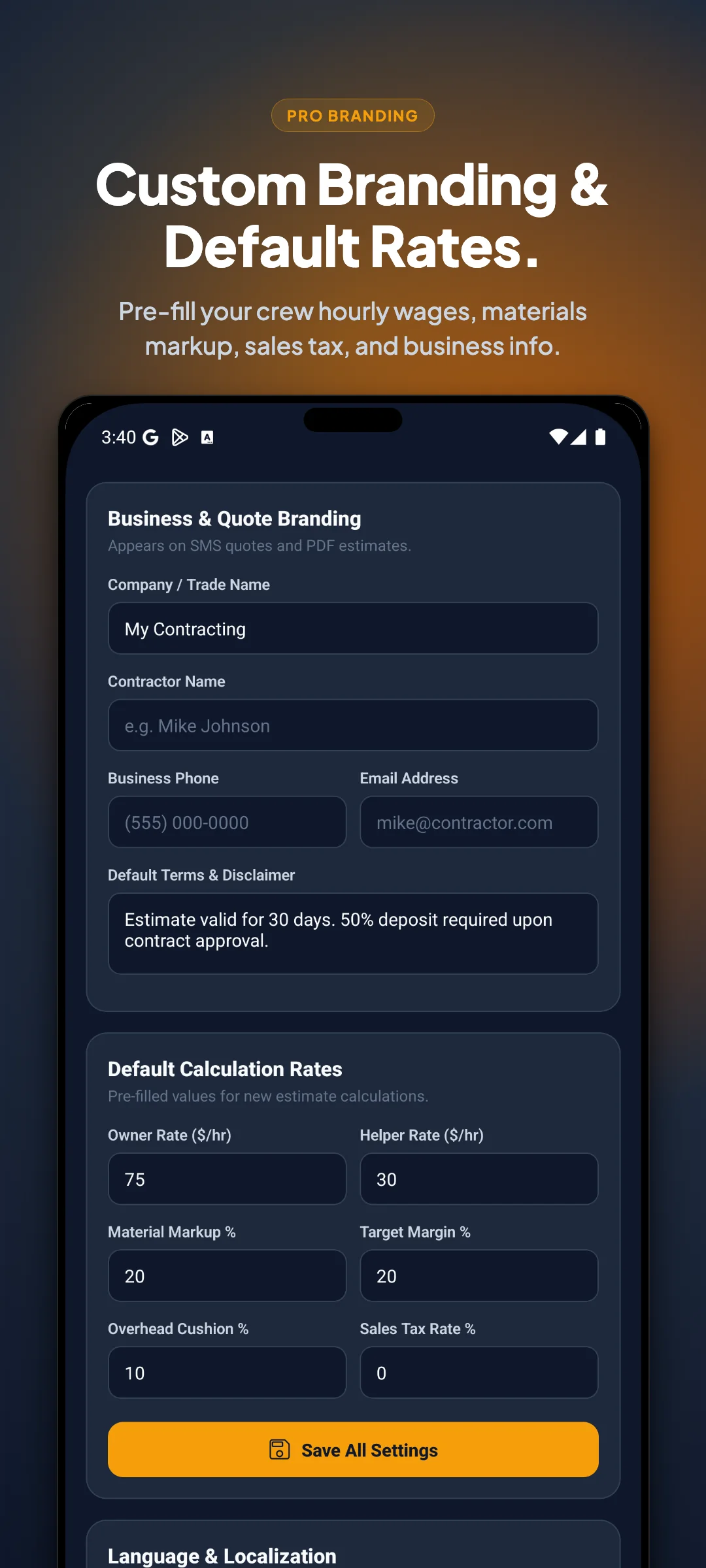
Your break-even price represents the absolute minimum amount you can charge without losing money on the job. It includes direct labor wages (both owner and crew), wholesale material costs, trip fees, disposal/dump fees, and your allocated business overhead (usually 10%–15%):
Break-Even Bid = (Owner Hours × Rate) + (Helper Hours × Wage) + Materials + Rental + Dump Fees + (Total Costs × Overhead %) Any bid below this number forces you to pay out of your personal pocket to work for the customer.
Frequently Asked Questions
What is the difference between markup and profit margin in contracting? ↓
Markup is the percentage added to your direct costs (e.g., adding 25% markup to a $1,000 material cost gives $1,250). Margin is the percentage of the final selling price that is profit (e.g., $250 profit on a $1,250 bid equals a 20% profit margin). Formula: Margin % = Markup % ÷ (1 + Markup %).
How do you calculate labor burden rate for construction bids? ↓
Labor burden adds all mandatory employer costs to the base wage: FICA/Medicare (7.65%), Federal/State Unemployment (FUTA/SUTA ~2-4%), Workers' Compensation insurance (typically 5-18% for trade crafts), and company benefits. Burden typically adds 25% to 35% on top of hourly employee base pay.
How much overhead should an independent contractor charge? ↓
Most trade contractors and handymen allocate between 10% and 20% for overhead on residential jobs. Overhead covers indirect operating costs such as vehicle payments, commercial liability insurance, contractor licensing, marketing, tool depreciation, and bookkeeping.
How do you calculate a break-even bid for a job? ↓
Your break-even price equals your total direct labor costs plus raw materials and jobsite expenses (rental, dump fees, travel), plus your overhead allocation. Bidding at break-even means your business covers all costs but generates zero net profit.
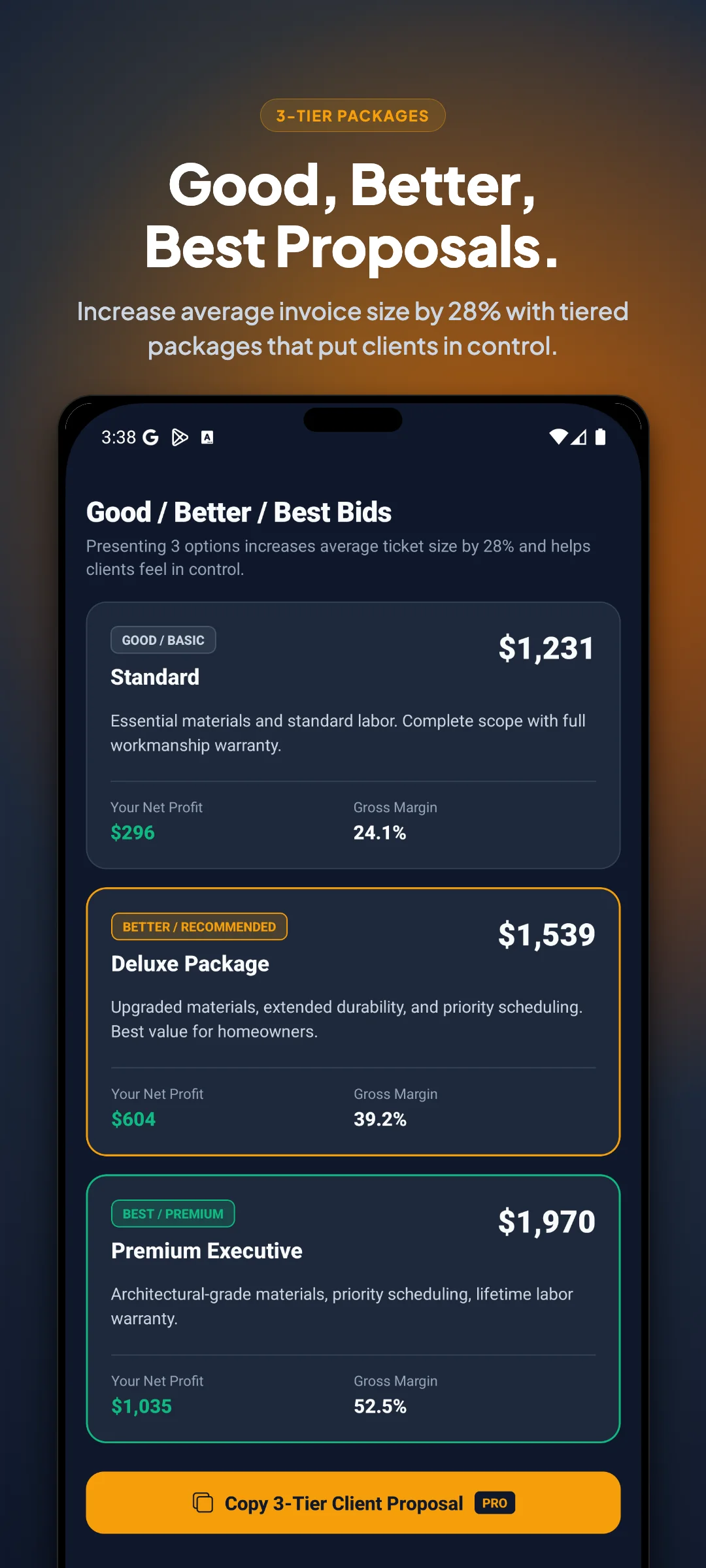
Why do Good, Better, Best proposals increase win rates? ↓
Offering three tiered choices shifts the customer's mindset from 'Should I hire this contractor or get another quote?' to 'Which of these three options best fits my budget?' Across home services, 3-tier proposals increase average ticket size by 20% to 28% while giving clients a sense of budget control.